


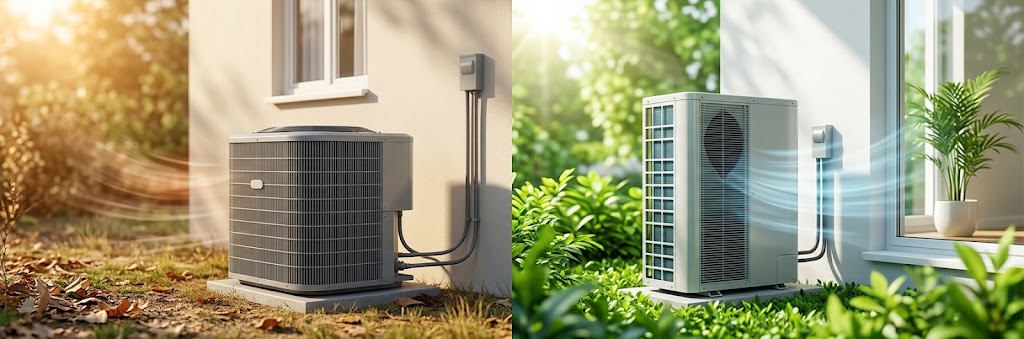
If you're shopping for a new cooling system this year, you've probably noticed that heat pumps are getting a lot more attention than they used to. They're not a new invention, but 2026 has become something of a turning point — heat pump shipments have actually overtaken traditional gas furnace shipments nationally, and more homeowners are asking whether a heat pump makes more sense than a conventional AC system. At The AC Outlet, this is one of the most common questions we get from homeowners planning a new system purchase, so let's break down how the two options actually compare.
The Core Difference
A traditional AC system does one job: it removes heat from inside your home and releases it outside, keeping your space cool. Heating, in a home with a traditional AC system, is typically handled separately — usually by a furnace burning gas or by electric resistance heating.
A heat pump does the same cooling job as a traditional AC system, but it can also run in reverse. Instead of only moving heat out of your home, it can pull heat from the outside air and move it inside, providing heating as well as cooling from a single piece of equipment. In effect, a heat pump replaces both your AC and your furnace with one system that handles both sides of home comfort.
This single difference — one job versus two — is the foundation for almost every other comparison between the two options.
Efficiency Comparison
Both technologies have gotten more efficient thanks to updated SEER2 standards and the broader shift toward next-generation refrigerants like R-32 and R-454B. But heat pumps have a structural efficiency advantage on the heating side: rather than generating heat by burning fuel or resistance heating, they move existing heat from one place to another, which is inherently a more efficient process in moderate climates.
Traditional AC systems remain highly efficient for cooling specifically, and modern SEER2-rated units are a meaningful step up from older equipment. But if you're comparing total household energy use — heating and cooling combined — a heat pump paired with a high-efficiency air handler often comes out ahead, particularly in regions with mild-to-moderate winters.
Climate Considerations
This is where the comparison gets more nuanced. Heat pump performance depends heavily on outdoor temperatures. In regions with mild winters, a heat pump can comfortably handle both heating and cooling needs for the entire year. In regions with more severe winters, older heat pump technology used to struggle, often requiring backup electric resistance heat during the coldest stretches, which could reduce overall efficiency gains.
That said, newer cold-climate heat pump models have addressed much of this gap. Advances in compressor technology and refrigerant performance have significantly improved how well modern heat pumps perform in colder conditions, which is part of why adoption has grown so quickly even in traditionally furnace-dominant regions. If you live somewhere with harsh winters, it's worth specifically asking about cold-climate-rated heat pump models rather than assuming all heat pumps perform the same in cold weather.
Upfront and Long-Term Costs
A traditional AC system paired with a separate furnace generally involves two pieces of major equipment, which can mean higher combined upfront costs when both need replacing, though each individual component may be less expensive on its own. A heat pump consolidates heating and cooling into one system, which can simplify both the purchase and future maintenance.
On the operating cost side, heat pumps often provide lower combined heating-and-cooling energy bills, particularly in areas with moderate climates or higher fuel costs relative to electricity rates. Traditional systems may still make sense in some cases — for example, homes in very cold climates with inexpensive natural gas access, where a furnace's heating cost per unit of energy may be lower than an electric heat pump's, even accounting for efficiency differences.
It's also worth noting that federal and utility incentive programs have increasingly favored heat pump adoption, given their role in broader electrification and efficiency goals. Depending on where you live, rebates or tax incentives may meaningfully offset the upfront cost difference, making heat pumps more cost-competitive than a straight equipment-price comparison would suggest.
Maintenance and Lifespan
Both systems require regular maintenance to perform efficiently, but a heat pump — because it operates year-round for both heating and cooling — generally sees more total run hours annually than a traditional AC system, which only runs during cooling season. This can mean slightly more wear over time, though modern heat pumps are built to handle year-round operation as standard.
Traditional systems split the workload between two separate pieces of equipment (AC and furnace), which can mean components wear more independently — a furnace with a well-maintained AC system might outlast a heat pump handling both jobs simultaneously, though real-world differences vary by brand, installation quality, and maintenance history.
How to Decide Between the Two
Here's a practical way to think through the decision for your home:
- Consider your climate first. If you live somewhere with mild-to-moderate winters, a heat pump is likely to be the more efficient, cost-effective choice for both heating and cooling. In colder climates, a cold-climate-rated heat pump or a hybrid system (heat pump paired with a backup furnace) may be worth exploring.
- Look at your current setup. If you're replacing an aging furnace and AC system at the same time, a heat pump lets you consolidate into one system rather than replacing two separate pieces of equipment.
- Check local incentives. Utility rebates and tax credits can significantly change the cost equation in favor of heat pumps, depending on your location.
- Think about your electricity vs. fuel costs. Compare your local electricity rates against gas or oil prices, since this directly affects the operating cost comparison between the two systems.
- Ask about hybrid options. Some homeowners choose a hybrid system that uses a heat pump for most of the year and switches to a traditional furnace only during the coldest stretches, combining efficiency with cold-weather reliability.
The Bottom Line
There's no universal right answer between a heat pump and a traditional AC system — the best choice depends on your climate, your current setup, local energy costs, and available incentives. What has changed in 2026 is that heat pumps are no longer a niche or regional choice; they're now a mainstream option that outperforms traditional systems in efficiency and versatility for a growing share of U.S. homeowners.
At The AC Outlet, we help homeowners work through this decision based on their specific home, climate, and budget — rather than a one-size-fits-all recommendation. If you're planning a new system purchase, understanding how heat pumps and traditional AC systems stack up for your situation is one of the most important steps before you buy.


