


A Comprehensive Guide to Colorado, California, and Federal Transitions
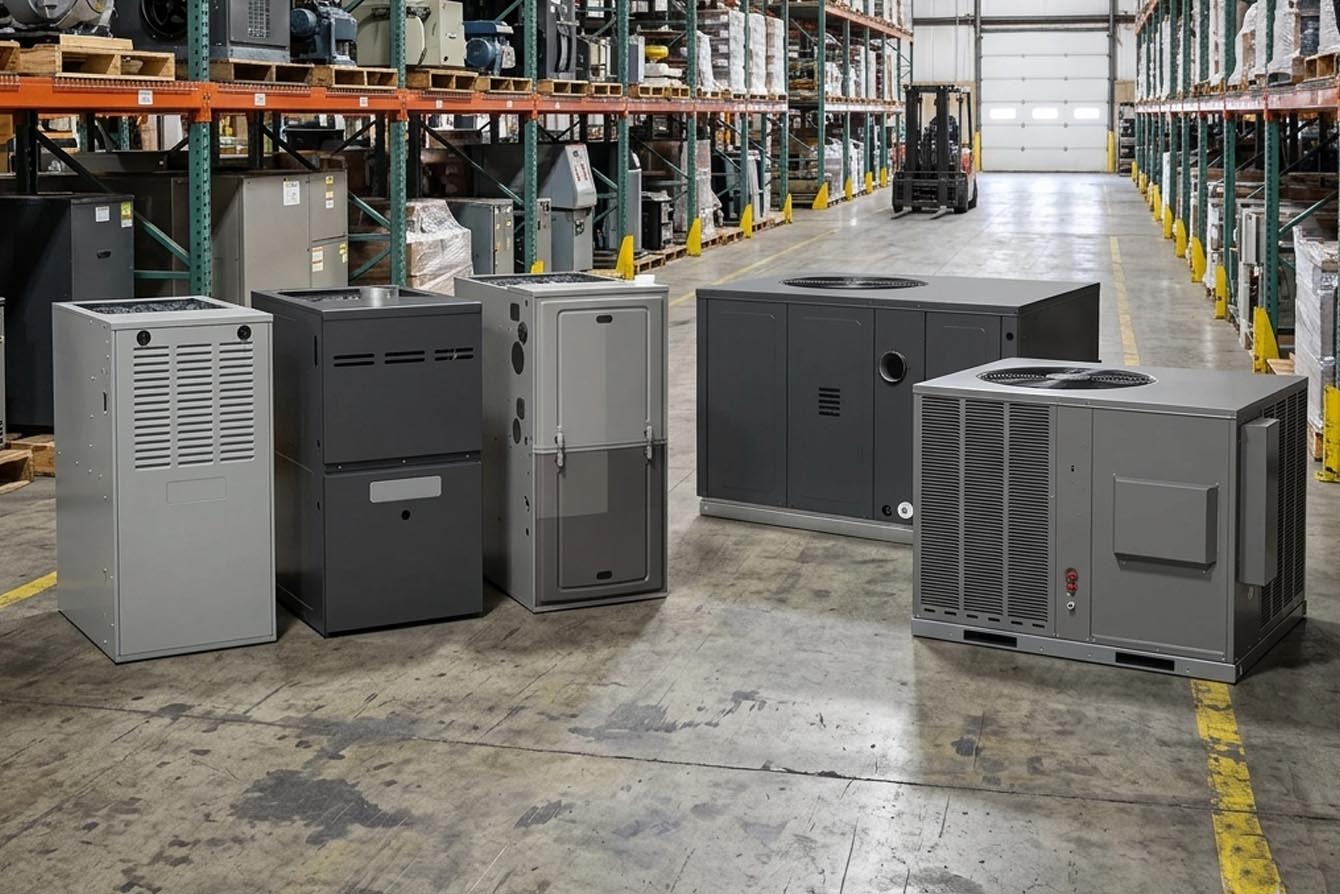
The HVAC landscape is undergoing its most significant shift in decades. Driven by air quality goals and climate legislation, the "standard" gas furnace and gas package unit is being phased out in favor of Ultra-Low NOx (Nitrogen Oxide) technology and high-efficiency heat pumps. Below is a breakdown of the critical regulations you need to know.

Colorado: The Clean Heat Transition
Colorado's House Bill 23-1161 has officially changed the market for residential and commercial heating as of 2026.
Key Enforcement Dates:
January 1, 2026: All new gas furnaces and gas package units must meet Ultra-Low NOx standards (≤ 10-14 ng/J).
January 1, 2026: New cooling units must transition to A2L low-GWP refrigerants.
July 1, 2026: Adoption of the Model Low Energy and Carbon Code for new construction.
The "80% Furnace" Status
You can no longer install standard 80% AFUE furnaces or gas package units. Only 80% models specifically engineered with Ultra-Low NOx burners are permitted. Most contractors are moving toward 95%+ AFUE condensing units to qualify for state tax credits.
California: Toward Zero-Emission Heating
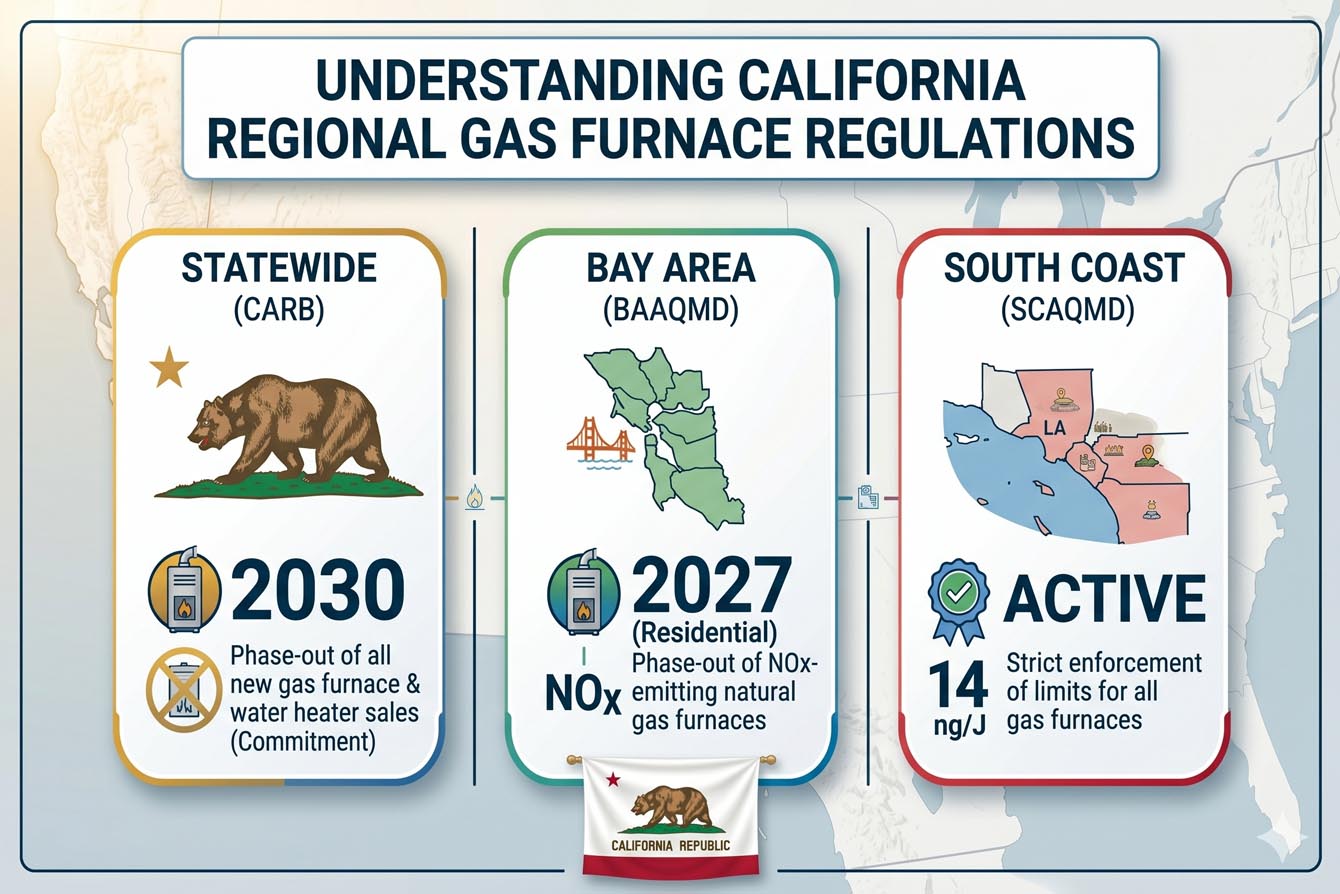
California leads the nation with the strictest air quality requirements, managed by the California Air Resources Board (CARB) and local Air Quality Management Districts (AQMD).
Ultra-Low NOx is Already the Baseline
For several years, most of California has required 14 ng/J (Ultra-Low NOx) furnaces. However, the state is now moving beyond "low emission" to "zero emission."
Impact:
In many CA districts, if your furnace fails after 2027-2029, a gas replacement may not be a legal option; you will likely be required to switch to an electric heat pump
Upcoming Federal Changes (All 50 States)
Regardless of your state, two major federal shifts are coming that align with the CO and CA rules
Disclaimer: HVAC regulations vary by municipality. Always consult with a licensed local contractor and check the latest updates from the Colorado Department of Public Health and Environment (CDPHE) or the California Air
Resources Board (CARB).


