


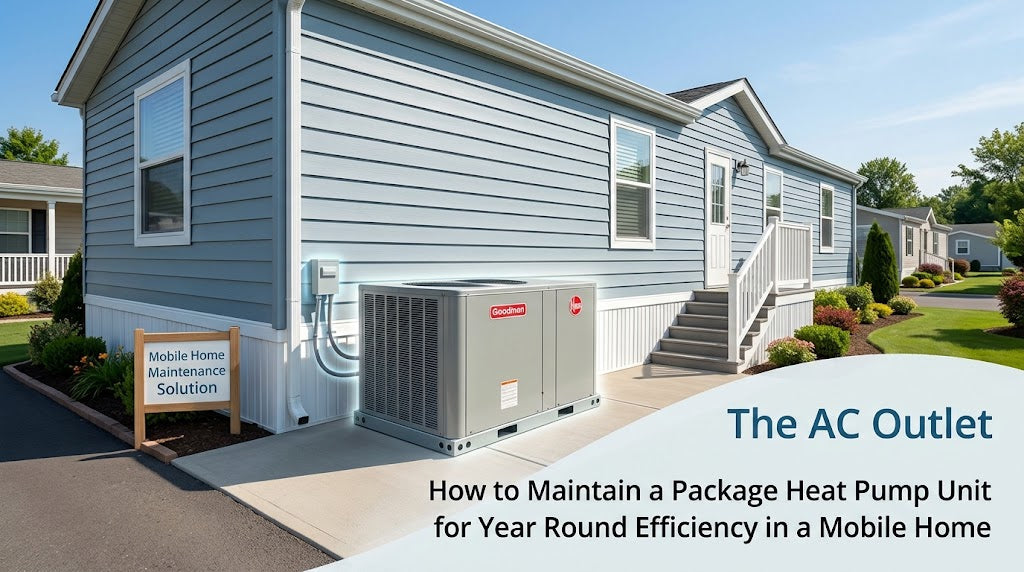
A properly sized, well-installed package heat pump is only part of the equation when it comes to reliable, efficient performance over the years. Ongoing maintenance plays just as significant a role, and package units mounted outdoors, as is standard for mobile homes, face specific exposure and wear considerations that make consistent upkeep particularly important.
At The AC Outlet, the difference between a system that reliably lasts well beyond a decade and one that fails prematurely often comes down less to the initial equipment and more to how consistently it has been maintained. This guide covers what mobile home owners should be doing on a regular basis to keep a package unit running year-round efficiently, along with the specific issues to watch for given outdoor exposure.
Why Maintenance Matters More for Outdoor Mounted Package Units
Because a package unit houses all of its components, including the blower and coils, in a single outdoor cabinet, the entire system is exposed to weather, temperature fluctuations, and outdoor debris in a way that split system components located partially indoors are not. This makes routine maintenance especially important for package units, since neglected upkeep tends to accelerate wear on components that are already operating in a more exposed environment.
Consistent maintenance also directly affects energy efficiency. A system with a dirty filter, blocked airflow, or a neglected outdoor coil has to work harder to achieve the same heating or cooling output, driving up energy costs even if the unit itself remains technically functional. Over time, this added strain also shortens the system's overall lifespan, meaning maintenance is not just about avoiding sudden breakdowns but about protecting the value of the investment made in the system itself.
Filter Changes: The Simplest and Most Important Task
Regular filter changes are the single most important maintenance task a homeowner can perform, and also the easiest to overlook. A clogged filter restricts airflow through the system, forcing the blower to work harder and reducing overall efficiency, while also allowing dust and debris to build up on internal components that are more difficult and costly to clean once affected.
Most standard filters should be checked monthly and replaced roughly every one to three months, though this can vary depending on the specific filter type, whether pets are present in the home, and local dust or pollen conditions. Homes in particularly dusty environments, or with pets shedding regularly, often need more frequent filter changes than the general guideline suggests.
This is a task most homeowners can perform themselves without professional assistance, and it is worth treating as a recurring calendar reminder rather than something addressed only when airflow noticeably weakens, since by that point the filter has often been neglected for longer than ideal.
Seasonal Maintenance Checks
Beyond routine filter changes, a package unit benefits from more thorough seasonal checks, ideally performed before the seasons of heaviest use, meaning ahead of summer cooling season and ahead of winter heating season.
Before cooling season, check that the outdoor cabinet is free of debris, including leaves, grass clippings, and any vegetation growing too close to the unit, since restricted airflow around the cabinet reduces cooling efficiency. Confirm the condensate drain is clear, since a blocked drain can lead to water damage or reduced cooling performance. It is also worth having a technician check refrigerant levels and overall system performance, since low refrigerant, often caused by a slow leak, significantly reduces cooling efficiency without necessarily producing an obvious symptom until performance has already declined noticeably.
Before heating season. Confirm the reversing valve, which switches the system between cooling and heating modes, is functioning properly, since this component can develop issues that are not noticed until the system fails to switch modes for the first time when heating is needed. Check for any supplemental heating elements, if your unit includes them, ensuring they engage properly during colder outdoor temperatures. As with the cooling season check, clearing debris from the outdoor cabinet remains important, since packed snow, ice, or fallen leaves can restrict airflow just as effectively as summer vegetation.
Ongoing throughout the year. Regardless of season, periodically inspect the area immediately around the outdoor cabinet, maintaining clear space for proper airflow, and listen for any unusual noises during operation, which can often signal a developing issue before it becomes a more serious, costly problem.
Common Issues Specific to Outdoor Mounted Package Units
Because package units are fully exposed outdoors, a few specific issues tend to arise more frequently than they would with the partially indoor components of a split system.
Corrosion. Outdoor cabinets are exposed to moisture, humidity, and, in some regions, salt air or road treatment chemicals, all of which can accelerate corrosion over time, particularly on cabinets that are not specifically designed with corrosion-resistant materials. Periodically inspecting the cabinet for early signs of rust or corrosion allows for addressing minor issues before they compromise the unit's structural integrity.
Debris accumulation. Because the entire unit sits outside, leaves, grass clippings, dirt, and other debris can accumulate both around and within the cabinet over time, restricting airflow and reducing efficiency. Regular clearing of the immediate area, along with periodic professional cleaning of internal components, helps prevent this gradual buildup from significantly affecting performance.
Pest intrusion. Outdoor units can occasionally become attractive nesting locations for small pests, particularly during colder months when the unit is not actively running as frequently. Periodic inspection helps catch this early, before pest activity causes damage to wiring or components inside the cabinet.
Wear on exposed components. Fan motors, coils, and other components exposed to constant temperature fluctuations and weather conditions may experience more gradual wear over time compared to components sheltered indoors. Routine professional inspection helps identify developing wear before it results in a system failure, particularly during periods of peak demand when a failure is most inconvenient.
Professional Maintenance vs. Homeowner Tasks
While filter changes and basic debris clearing are tasks most homeowners can comfortably manage themselves, certain maintenance tasks are best left to a qualified technician, including refrigerant level checks, electrical component inspection, and detailed cleaning of internal coils and components. Attempting these tasks without proper training and equipment can risk damaging the system or, in the case of refrigerant handling, involves legal and safety considerations that require professional certification.
A reasonable approach for most mobile home owners involves handling routine filter changes and basic debris clearing independently, while scheduling professional maintenance visits at least once or twice annually, ideally timed ahead of the cooling and heating seasons respectively, to address the more technical aspects of upkeep.
Recognizing When Maintenance Alone Is No Longer Enough
Consistent maintenance significantly extends a package unit's useful lifespan, but every system eventually reaches a point where age-related wear outweighs what routine upkeep can address. If your system is requiring increasingly frequent repairs despite consistent maintenance, or if efficiency continues to decline even with regular filter changes and professional servicing, these can be signs that replacement, rather than continued maintenance, is the more sensible path forward.
Final Thoughts
Consistent maintenance is one of the most cost-effective ways to protect the performance, efficiency, and lifespan of a package heat pump unit, particularly given the outdoor exposure these systems face in mobile home installations. Regular filter changes, seasonal checks ahead of heavy use periods, and attentiveness to the specific wear patterns common to outdoor-mounted equipment together go a long way toward avoiding premature failures and unnecessary energy costs.
At The AC Outlet, we help mobile home owners establish maintenance routines suited to their specific system and climate, and we perform the more technical seasonal servicing that keeps a package unit operating at its intended efficiency for years to come. A well-maintained system, properly sized and installed from the outset, is one of the most reliable ways to ensure consistent comfort in your mobile home regardless of the season.


