


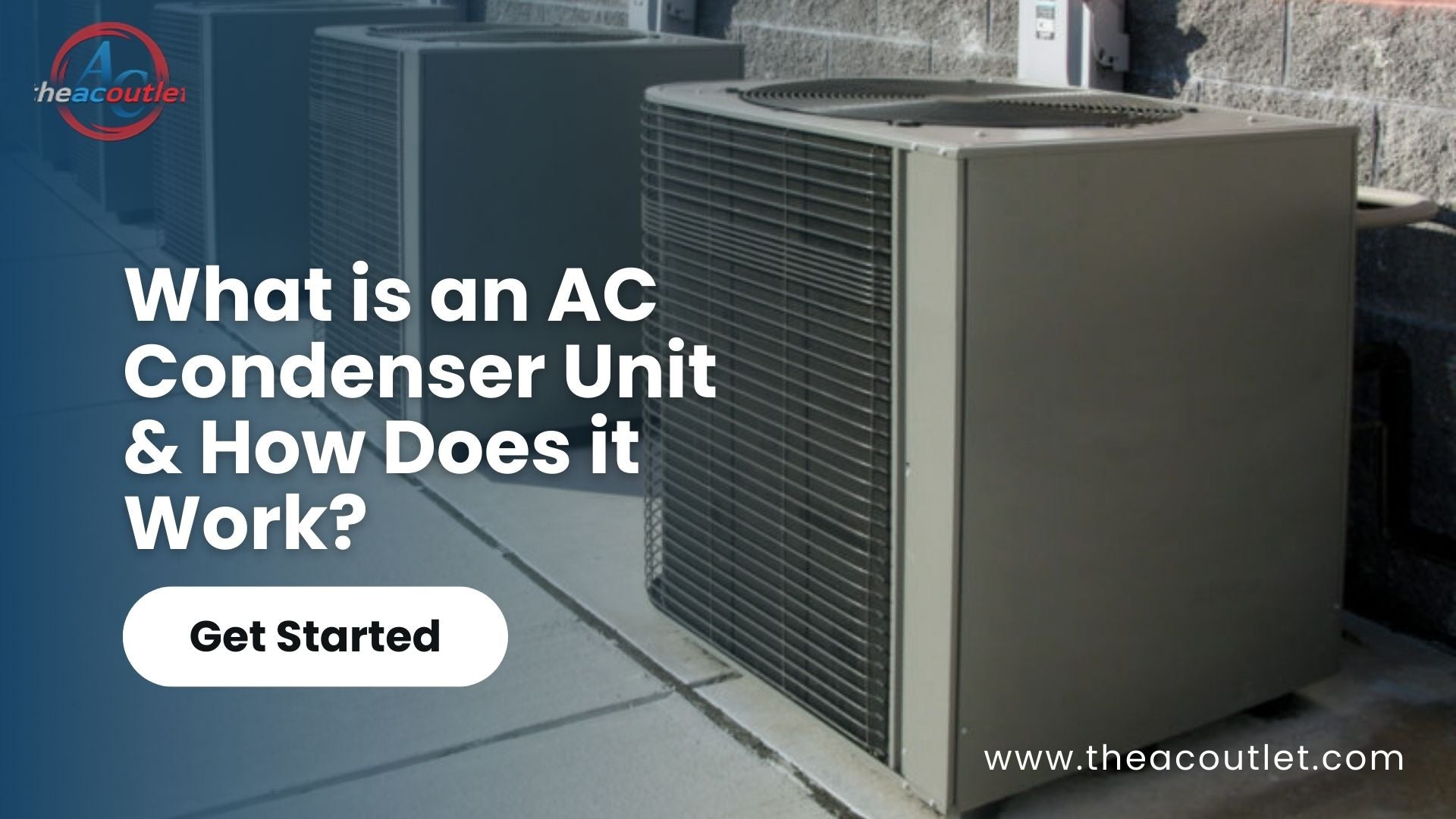
An AC condenser unit is a critical component of any HVAC system, designed to efficiently transfer heat from your home’s interior to the outside environment. It achieves this through the process of refrigerant phase changes, which draw heat from the air and release it outside. Without the condenser, the entire cooling cycle would fail to function. At The AC Outlet, we provide wholesale HVAC equipment to ensure top-notch performance for your HVAC systems.
What is an AC Condenser Unit?
An AC condenser unit is the part of your air conditioning system located outdoors. It functions as the heat exchanger, taking the refrigerant in its high-pressure, gaseous state and cooling it down to transform it into a liquid. This phase change is vital for the cooling process inside your home.
Key components of an AC condenser unit include:
- Condenser Coils: Enable heat transfer from the refrigerant to the outside air.
- Compressor: Pressurizes the refrigerant to raise its temperature.
- Fan: Blows air over the coils to enhance the cooling process.
- Refrigerant Lines: Transport refrigerant between indoor and outdoor units.
The AC condenser unit ensures efficient heat dissipation and prepares the refrigerant for the next cooling cycle. Learn more about its components in The Role of AC Condenser Coils in Cooling Systems.
How Does an AC Condenser Unit Work?
The functionality of an AC condenser unit can be broken down into the following steps:
-
Compression: The refrigerant enters the condenser unit as a low-pressure gas. The compressor increases its pressure and temperature, transforming it into a high-pressure, high-temperature gas.
-
Heat Dissipation: The hot refrigerant flows through the condenser coils. Simultaneously, the fan blows cool air over these coils, facilitating the transfer of heat from the refrigerant to the outdoor environment. This process lowers the temperature of the refrigerant significantly.
-
Condensation: Inside the condenser coils, the refrigerant undergoes a phase change from a gas to a liquid. This process, known as condensation, is crucial for the refrigerant to absorb more heat when it cycles back inside the house.
-
Cycle Continuation: The cooled liquid refrigerant travels back through the refrigerant lines to the evaporator coil inside your home, where it absorbs heat from indoor air, completing the cooling cycle.
For a detailed guide on maintaining this process, visit How to Maintain Your AC Condenser Unit for Optimal Performance.
For instance, the Energy Foundation promotes sustainable energy practices and supports policies that encourage the adoption of efficient technologies. Upgrading to a high-efficiency AC condenser unit not only saves money but also contributes to environmental sustainability.
How to Get the Most Out of Your Condenser?
To maximize the efficiency and lifespan of your AC condenser unit:
- Clean Regularly: Remove dirt and debris from the coils and fins to maintain optimal heat exchange.
- Inspect Components: Check for refrigerant leaks, loose electrical connections, and worn parts.
- Schedule Professional Maintenance: Routine servicing helps identify and address potential issues early.
Learn more maintenance tips in How to Maintain Your AC Condenser Unit for Optimal Performance.
What Size Condenser Do I Need?
Choosing the correct size for your AC condenser is crucial for efficiency and effectiveness. An undersized unit will struggle to cool your home, while an oversized one can lead to energy wastage. Factors to consider include:
- Square Footage: Larger spaces require higher BTU ratings.
- Climate: Hotter regions need units with greater cooling capacity.
- HVAC System Compatibility: Ensure the condenser matches the specifications of your indoor components.
For a comprehensive guide, check How to Choose the Right AC Condenser for Your HVAC System.
What Energy Efficiency Should I Look For in an AC Condenser Unit?
Energy-efficient condensers reduce electricity costs and benefit the environment. Look for:
- High SEER Ratings: Units with higher Seasonal Energy Efficiency Ratios are more energy-efficient.
- Energy Star Certification: Indicates compliance with strict energy-saving standards.
- Innovative Technology: Features like variable-speed compressors enhance performance.
Explore this topic further in Energy Efficiency and AC Condenser Units.
Common Problems with AC Condenser Units
AC condenser units can encounter issues that compromise their performance. Common problems include:
- Refrigerant Leaks: Can lead to reduced cooling efficiency and environmental harm.
- Overheating: Often caused by dirty coils or restricted airflow.
- Mechanical Failures: Strange noises may signal worn-out parts or loose connections.
The AC condenser unit is essential for keeping your home cool and comfortable. It’s the workhorse of your HVAC system, responsible for heat exchange and efficient cooling. Trust The AC Outlet for wholesale HVAC equipment that ensures reliable performance for years to come.


