


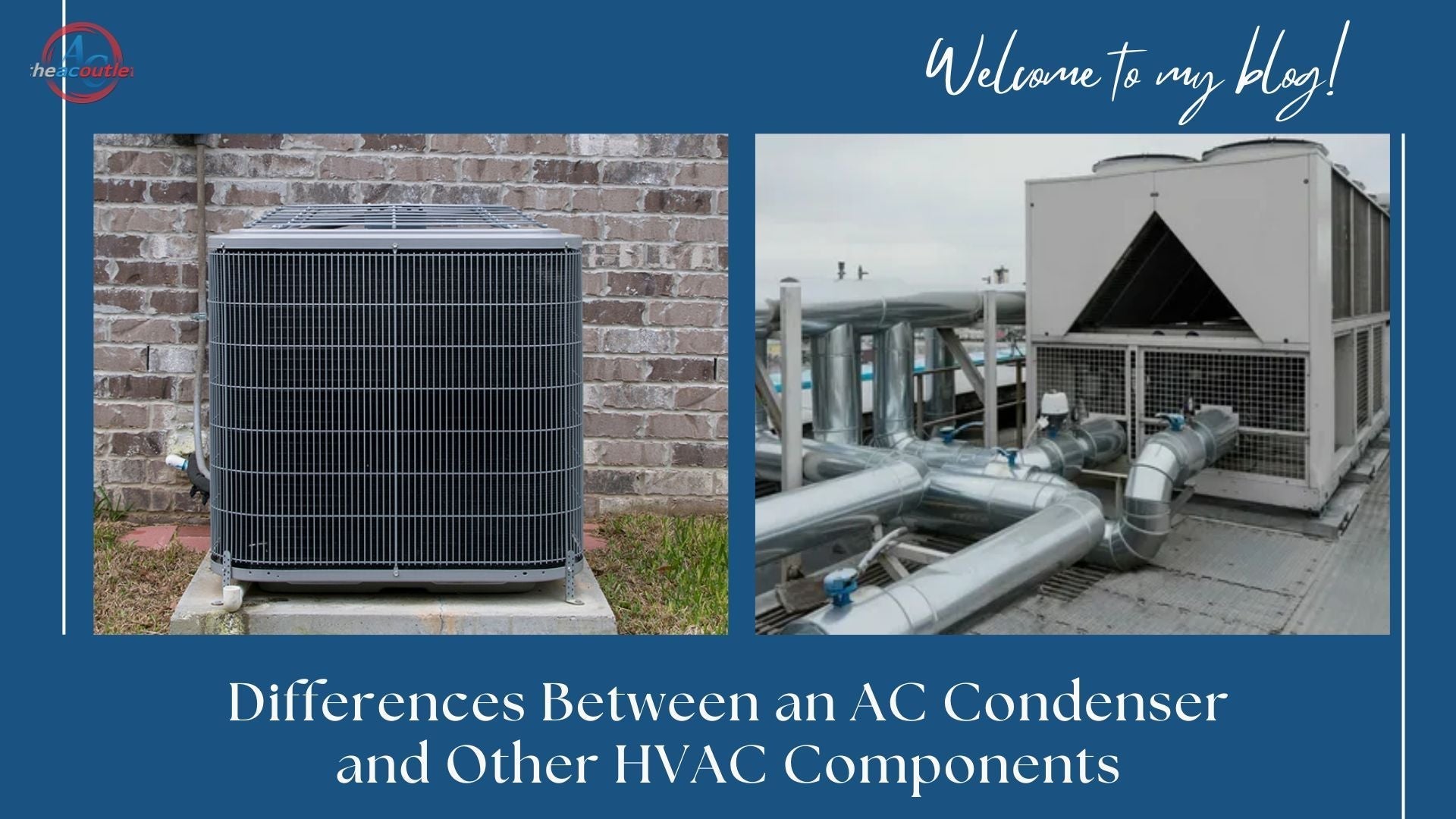
Understanding the role of an AC condenser unit in your HVAC system is essential for optimizing performance and efficiency. While an air conditioner condenser unit is a critical component in cooling systems, it differs significantly from other HVAC elements like evaporators, compressors, and air handlers. Knowing these differences can help homeowners and technicians maintain and troubleshoot their systems more effectively.
In this guide, we’ll break down the key distinctions between an AC condenser unit and other essential HVAC components, ensuring you have a clear understanding of how your cooling system functions.
What is an AC Condenser Unit?
The AC condenser unit is responsible for releasing heat absorbed from inside your home to the outside environment. It works in conjunction with other air conditioner condensing unit components to facilitate the refrigeration cycle.
Functions of an AC Condenser Unit:
- Converts refrigerant from a gas to a liquid state.
- Releases heat from the system to the outdoors.
- Works alongside the compressor and evaporator to maintain cooling efficiency.
Learn more about What is an AC Condenser Unit and how it works.
Key Differences Between an AC Condenser and Other HVAC Components
1. AC Condenser vs. Compressor
While the AC condenser unit dissipates heat, the compressor plays a different role in the system.
|
Component |
Function |
Location |
|
AC Condenser |
Releases heat outdoors and converts refrigerant to liquid |
Outside the home |
|
Compressor |
Pressurizes refrigerant to keep it moving through the system |
Inside the condenser unit |
The compressor is often called the "heart" of the cooling system, while the condenser acts as the "lungs," expelling unwanted heat.
AC Condenser vs. Evaporator Coil
The evaporator coil and the air conditioner condenser unit work together but perform opposite functions in the cooling cycle.
|
Component |
Function |
Location |
|
AC Condenser |
Expels heat outside |
Exterior unit |
|
Evaporator Coil |
Absorbs heat from indoor air |
Inside the air handler or furnace |
The evaporator coil cools the indoor air before the AC condenser unit expels the absorbed heat outside.
AC Condenser vs. Air Handler
The air handler distributes conditioned air throughout your home, whereas the AC condensing unit is involved in heat exchange.
|
Component |
Function |
Location |
|
AC Condenser |
Releases heat and facilitates refrigerant transformation |
Outside |
|
Air Handler |
Pushes cooled air through ducts |
Inside (attic, basement, or closet) |
While the AC condenser unit supports the cooling process, the air handler ensures that cooled air circulates efficiently.
AC Condenser vs. other HVAC Equipment
HVAC systems consist of various components beyond just the air conditioner condenser unit. While the AC condenser unit is crucial for cooling, other HVAC equipment ensures overall comfort year-round.
Other Important HVAC Components:
- Heat Pump: This is a condenser that works as both a heater and cooler.
- Furnace: Provides heat during cold months.
- Thermostat: Controls temperature settings.
- Ductwork: Distributes conditioned air throughout the house.
Each component plays a specific role, making your HVAC system a complete climate control solution. Explore how HVAC Equipment contributes to home comfort.
Conclusion
The AC condenser unit is a vital component of any cooling system, but it functions distinctly from other HVAC parts like compressors, evaporators, and air handlers. Understanding these differences can help with system maintenance, troubleshooting, and improving overall efficiency.
By knowing how each component interacts, you can ensure your air conditioner condenser unit and entire HVAC system perform optimally, providing lasting comfort and efficiency for years to come.


