


Understanding how geothermal heat pumps work is essential for homeowners looking to invest in energy-efficient heating and cooling systems. Unlike conventional HVAC systems that rely on fossil fuels or air-source heat exchange, a geothermal heat pump system harnesses the stable temperature of the earth to provide consistent comfort year-round. The AC Outlet specializes in installing high-quality geothermal systems, including premium units from ClimateMaster, ensuring maximum efficiency and reliability.
What is a Geothermal Heat Pump System?
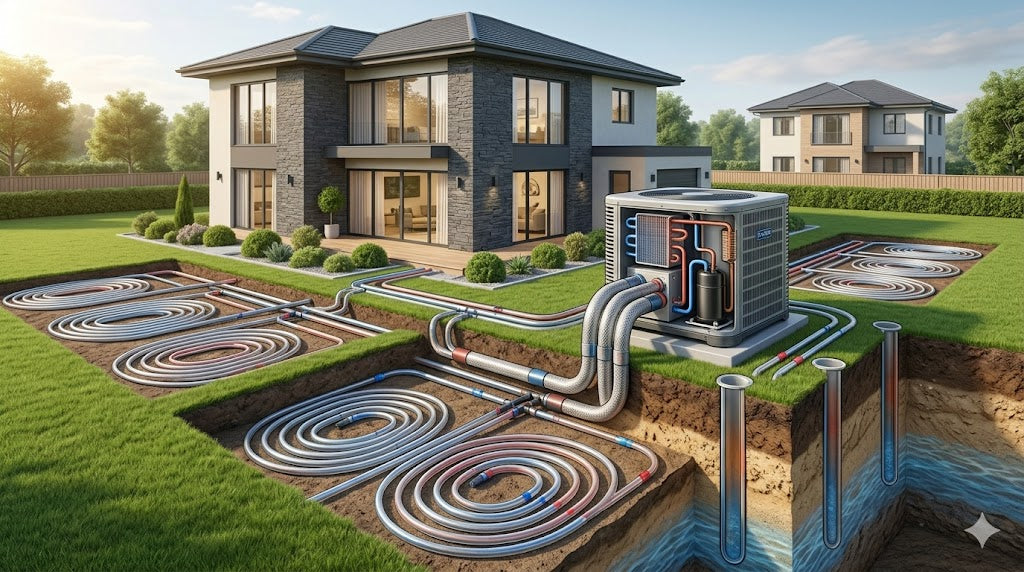
A geothermal heat pump system is a type of HVAC equipment that uses the earth as a heat source in winter and a heat sink in summer. By circulating a water-based or refrigerant fluid through a series of underground pipes known as ground loops, the system absorbs or dissipates heat depending on the season.
The core components of a geothermal system include:
- Heat pump unit: Converts thermal energy from the ground loop into usable heating or cooling for the home.
- Ground loops: Pipes buried horizontally or vertically in the soil that transfer heat.
- Air handler/ductwork: Distributes conditioned air throughout the home.
- Refrigerant or heat transfer fluid: A Medium that circulates through the loop and heat pump to transfer energy efficiently.
ClimateMaster units, like the Tranquility series, are engineered to optimize heat exchange, reduce energy consumption, and provide quiet, reliable operation.
How Geothermal Heat Pumps Work in Winter
During colder months, geothermal energy heating and cooling operate by extracting heat from the earth, which maintains a relatively constant temperature below the surface.
Here’s how the process works:
- The ground loop absorbs heat from the soil.
- The heat transfer fluid circulates through the geothermal heat pump system.
- The heat pump unit amplifies the thermal energy to a usable temperature.
- Warm air is distributed via the home’s ductwork.
This process is far more efficient than traditional furnaces, as it requires less electricity to move heat rather than generate it. The AC Outlet ensures proper installation of HVAC equipment for optimal winter performance and energy savings.
How Geothermal Heat Pumps Work in Summer
In the warmer months, the process is reversed. The system removes heat from the home and transfers it into the ground via the ground loops.
- The heat pump extracts indoor heat.
- The refrigerant carries heat to the underground loop.
- The earth absorbs the heat, keeping the home cool.
Because the ground temperature remains cooler than the air, this process is significantly more efficient than conventional air conditioning. High-performance units from ClimateMaster maximize this efficiency, providing consistent cooling with lower energy usage.
Types of Geothermal Heat Pump Systems
There are two main types of geothermal heat pump systems commonly used in residential and commercial applications:
Closed-Loop Systems
- Fluid circulates through buried pipes.
- Can be installed horizontally or vertically, depending on available space.
- Requires minimal maintenance and is highly durable.
Open-Loop Systems
- Uses groundwater directly as the heat exchange medium.
- Often more efficient in areas with abundant water resources.
- Requires proper water treatment and permits.
The AC Outlet can help determine the ideal system type for your property and climate, ensuring the best performance and energy savings from your HVAC equipment.
Advantages of Geothermal Energy Heating and Cooling
Investing in a geothermal heat pump system offers multiple benefits:
- Energy Efficiency: Uses 30–60% less electricity than conventional HVAC systems.
- Year-Round Comfort: Provides reliable heating and cooling throughout all seasons.
- Low Environmental Impact: Reduces carbon emissions and often qualifies for incentives and rebates.
- Longevity: Ground loops can last 50+ years, while indoor units last 20–25 years.
- Quiet Operation: Systems like ClimateMaster Tranquility SC are designed for minimal noise.
The AC Outlet ensures homeowners experience all these benefits through expert installation and maintenance of geothermal systems and other high-quality HVAC equipment.
The Science Behind Heat Exchange
The key to understanding how geothermal heat pumps work is the principle of heat transfer. The earth’s temperature remains relatively stable year-round, typically between 50–60°F (10–16°C) at a few feet underground. By leveraging this stable temperature:
- The system requires less energy to achieve comfortable indoor conditions.
- The heat pump efficiently transfers heat using refrigerant or water-based fluids.
- Advanced units, like those from ClimateMaster, use coaxial heat exchangers, TXV metering devices, and microprocessor controls to maximize energy efficiency.
This makes geothermal systems one of the most reliable and eco-friendly HVAC equipment available today.
Cost Considerations and Savings
While the initial cost of a geothermal heat pump system is higher than conventional HVAC installations, long-term savings are significant:
|
System Type |
Average Installation Cost |
Notes |
|
Closed-loop Horizontal |
$10,000–$25,000 |
Requires land for trenches |
|
Closed-loop Vertical |
$20,000–$40,000 |
Ideal for smaller properties |
|
Open-loop |
$15,000–$30,000 |
Requires suitable groundwater |
Homeowners can recoup the investment within 5–10 years through lower utility bills, tax incentives, and energy rebates. The AC Outlet provides detailed cost assessments to help you plan and maximize your savings.
Maintenance and Longevity
Proper maintenance is key to the long-term performance of a geothermal heat pump system:
- Annual inspection of ground loops and refrigerant levels.
- Cleaning and checking the air handler and ductwork.
- Monitoring system performance via microprocessor controls.
FAQs About How Geothermal Heat Pumps Work
-
How does a geothermal heat pump system save energy?
By transferring heat instead of generating it, geothermal systems use less electricity, lowering utility bills by 30–60%. -
Can geothermal systems be installed with existing HVAC equipment?
Yes, many HVAC systems can integrate with geothermal units for hybrid systems. -
Is geothermal energy heating and cooling suitable for all climates?
Yes, geothermal systems work efficiently in both hot and cold climates due to the stable underground temperature. -
What brands are recommended for geothermal systems?
ClimateMaster is a leading brand known for reliable and efficient geothermal heat pumps. The AC Outlet offers expert installation of these units. -
How long do geothermal systems last?
Ground loops last 50+ years, and indoor units typically last 20–25 years with proper maintenance.
Conclusion
Understanding how geothermal heat pumps work helps homeowners make informed decisions about sustainable, cost-effective heating and cooling. A properly designed geothermal heat pump system, especially when installed by The AC Outlet, ensures maximum energy efficiency, comfort, and reliability. Premium units from ClimateMaster provide cutting-edge technology, quiet operation, and long-term durability.
For homeowners seeking advanced HVAC equipment that combines energy savings with environmental responsibility, geothermal systems are a smart and forward-thinking choice.


