


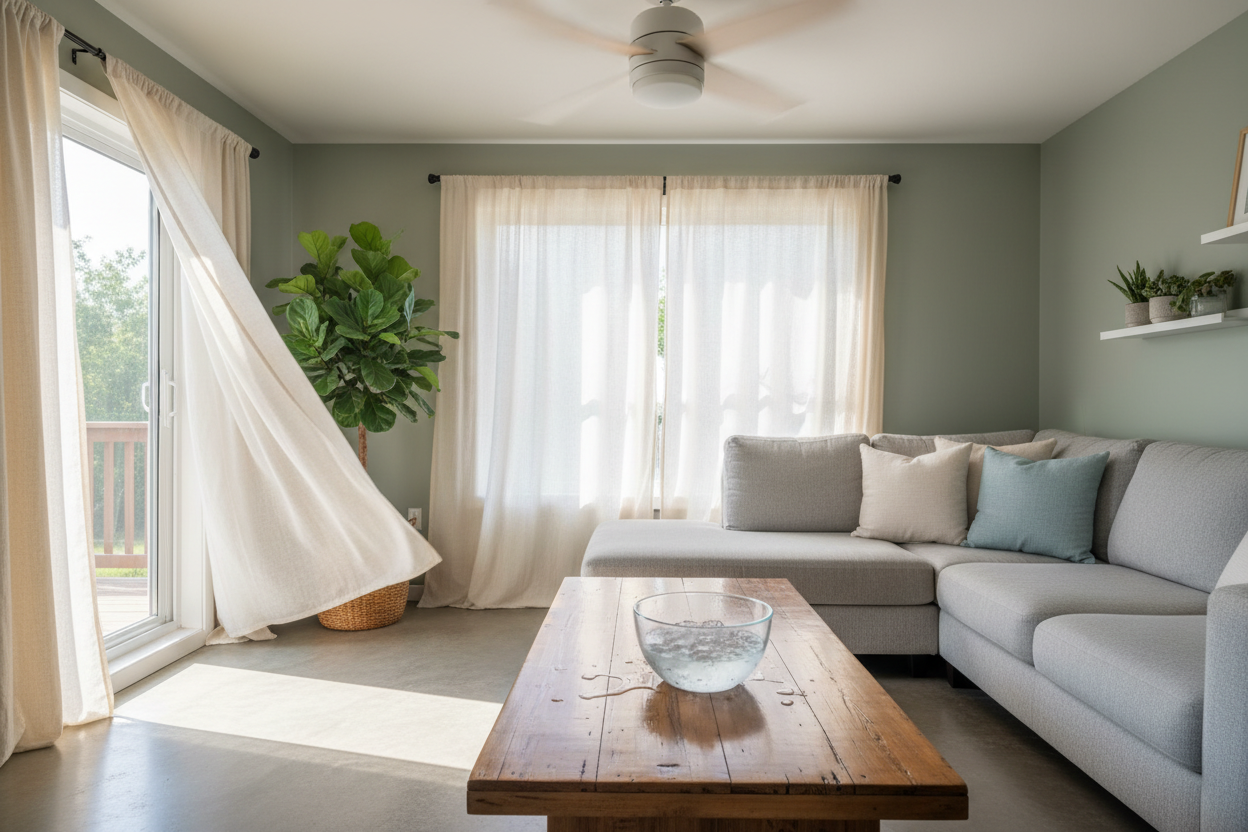
Your air conditioner is working harder than it should be. Not because it's broken — but because your home is letting heat in faster than your AC can push it out. The result: a system that runs almost continuously, an energy bill that climbs every month, and rooms that still don't feel quite right even when the thermostat reads 72°F.
The good news? You don't need to choose between comfort and cost. A few targeted changes to how you manage heat in and around your home can cut your AC runtime significantly — and on some days, let you stay comfortable without flipping the system on until late afternoon.
Here are 15 proven ways to stay cool this summer without running your AC all day.
1. Block Heat Before It Gets Inside
Your AC doesn't just fight the outdoor temperature — it fights the sun. Solar heat gain through windows is responsible for up to 30% of unwanted heat in your home during summer, according to the U.S. Department of Energy. That means glass facing south and west is actively working against your cooling system from mid-morning through early evening.
What to do:
- Close blinds and curtains on south- and west-facing windows before 10 AM, before the heat loads in
- Install thermal blackout curtains in rooms that take direct afternoon sun — they reduce solar heat gain by up to 45%
- Consider reflective window film on large glass areas; it blocks radiant heat while still allowing light through
- Use exterior shading (awnings, shade sails, or strategically planted trees) for long-term impact — a shaded window transmits 6x less heat than an unshaded one
This single habit — close west-facing blinds before noon — can drop indoor temperatures by 4–6°F by late afternoon, reducing the load on your AC significantly.
2. Use Ceiling Fans the Right Way
Ceiling fans don't lower the temperature in a room — they lower how hot the room feels to the people in it. Moving air increases evaporative cooling from skin, making a 76°F room feel like 71°F. That 5-degree perceived difference is the gap between comfortable and not.
The rules:
- Run ceiling fans counterclockwise in summer (when viewed from below) — this pushes air straight down and creates the cooling downdraft effect
- Turn fans off when you leave the room. They cool people, not spaces — leaving them on in an empty room wastes electricity
- Combine ceiling fans with your AC: raise the thermostat 4°F with fans running and feel the same comfort level, using less energy overall
If you don't have ceiling fans, a well-placed tower or box fan in a doorway or window can create meaningful cross-ventilation during cooler parts of the day.
3. Ventilate Strategically at Night
Most climates — even hot ones — experience a temperature drop of 15–25°F overnight. That cooler air is free cooling if you capture it.
The strategy:
- Open windows on opposite sides of the home after 9–10 PM to create cross-ventilation and flush out the day's accumulated heat
- Place a box fan facing outward in one window to actively exhaust hot air while cooler air draws in from the other side
- Close everything back up by 7–8 AM before outdoor temperatures rise again
- In particularly humid climates, this works best on dry nights — if outdoor humidity is above 70%, the trade-off diminishes
On a good night-flush, your home can start the next day 5–8°F cooler than it would have otherwise, meaning your AC starts from a better baseline and runs less before reaching set temperature.
4. Rethink When You Use Heat-Generating Appliances
Your oven, stovetop, dishwasher, dryer, and even your incandescent lighting are all generating heat inside your home — heat your AC then has to remove on top of whatever is coming in from outside.
Practical shifts:
- Cook with the oven before 10 AM or after 8 PM, or move cooking outside to a grill on peak heat days
- Switch to microwave, air fryer, or slow cooker for summer weeknight meals — they generate a fraction of the heat of an oven
- Run the dishwasher and clothes dryer after 9 PM when outdoor temperatures have dropped and your home isn't fighting peak heat
- Replace incandescent bulbs with LED throughout the home — LEDs produce 75% less heat for the same light output
These changes don't require any sacrifice — you're doing the same tasks at a slightly different time or with a different appliance.
5. Seal the Leaks Your AC Is Fighting Every Minute
The average US home loses a significant amount of conditioned air through gaps around doors, windows, attic hatches, recessed lighting, and wall penetrations. Your AC is working to maintain 72°F while outdoor air at 95°F is continuously infiltrating through these gaps.
Where to check and seal:
- Door frames and threshold gaps — daylight visible at the edges means air is moving freely
- Window frames — older single-hung windows are notorious for air leakage around the sash
- Attic access hatches — uninsulated attic hatches are a direct thermal bridge to your hottest space
- Electrical outlets on exterior walls — inexpensive foam gaskets behind the cover plates make a real difference
- Gaps around pipes, vents, and cables penetrating exterior walls
A tube of weatherstrip foam and a few rolls of door seal tape costs under $30 and addresses the most common leak points. The energy savings on a leaky house can be significant enough that sealing pays back within a single summer season.
6. Manage Your Thermostat Smarter
The biggest single driver of high AC bills isn't the system itself — it's thermostat behavior. Keeping a home at 68°F all day when no one is home wastes enormous energy for zero benefit.
Smarter thermostat habits:
- Set the thermostat to 78°F when the home is occupied, and let it rise to 85–88°F when no one is home for more than an hour
- Pre-cool the home 30–45 minutes before you return rather than running it low all day
- A programmable thermostat automates this entirely — set it once and forget it
- A smart thermostat (Nest, Ecobee) learns your schedule and makes these adjustments automatically, often delivering 10–15% energy savings with no behavior change required
Every degree you raise the thermostat above 72°F while maintaining comfort (using fans as described above) reduces cooling energy consumption by roughly 3%.
7. Reduce Humidity, Not Just Temperature
Hot and humid feels dramatically worse than hot and dry. At 90°F and 30% humidity, most people are uncomfortable but managing. At 90°F and 70% humidity, the same temperature becomes genuinely dangerous.
Your AC dehumidifies as it cools — but only when it runs long enough. An oversized AC unit that short-cycles (reaches temperature set point quickly and shuts off) often leaves excess humidity in the air even while hitting the temperature target.
What helps:
- Run exhaust fans in the kitchen and bathrooms during and after cooking and showering — these are your two biggest indoor humidity sources
- Check that your AC isn't oversized for the space. A correctly sized unit runs in longer cycles and removes more moisture per hour of operation than an oversized unit cycling on and off
- Use a standalone dehumidifier in a particularly humid basement or sunroom — it takes load off your AC and makes the space feel cooler at the same temperature
If your home feels clammy even when the AC is running, that's a short-cycling sign worth investigating. It often points to an oversized unit or low refrigerant.
8. Use Zoning to Your Advantage
Most people cool their entire home to the same temperature all day — even the rooms no one is using. This is one of the least efficient ways to run an AC system.
How to zone without a full zoning system:
- Close vents (and doors) in unused rooms — guest rooms, formal dining rooms, storage areas — to redirect conditioned air where it's actually needed
- In homes without ductwork, this is exactly where mini-split systems shine: cool only the zones where people are, independently, and let the rest of the home ride
- If you have a two-story home, keep upstairs cooler during sleeping hours (heat rises) and allow the ground floor to warm slightly during overnight hours
Considering a mini-split for zone-specific cooling? A single-zone mini-split in the bedroom means you can sleep at 70°F without cooling the entire house to that level all night.
Shop mini-split systems at The AC Outlet
9. Check Your AC's Efficiency Before Assuming You Need to Run It More
If your home consistently can't reach a comfortable temperature even with your AC running, the problem isn't always that you need to run it longer — it might be that the system is no longer running efficiently.
Signs your AC is working harder than it should:
- The system runs for extended periods without reaching the set temperature
- Energy bills have increased year-over-year without a change in habits
- Some rooms are noticeably harder to cool than others
- The system is 10+ years old
An aging, inefficient system has to run longer to deliver the same cooling — and that runtime adds up on your monthly bill. Replacing a 10 SEER system with a 16–18 SEER system can reduce cooling energy consumption by 30–40%.
Is it time to upgrade your central AC system?
Browse high-efficiency condensers at The AC Outlet
10. Insulate Your Attic — It's the Biggest Heat Source in Your Home
In summer, attic temperatures regularly hit 130–150°F in hot climates. That radiant heat transfers directly through the ceiling into your living space, adding enormous load to your AC system. Attic insulation is the single most impactful home improvement for reducing summer cooling costs.
What to know:
- The recommended attic insulation level for most of the US is R-38 to R-60
- Blown-in insulation is the most cost-effective method for existing homes
- Radiant barrier foil installed on attic rafters reflects up to 97% of radiant heat before it reaches the insulation layer
- Attic insulation improvements typically have a payback period of 3–5 years through reduced energy costs
This is a one-time investment with a multi-decade benefit. If your home was built before 1990, there's a reasonable chance your attic is under-insulated by current standards.
11. Keep Your Outdoor AC Unit Shaded and Clear
Your central AC condenser or mini-split outdoor unit works by exhausting heat from your home to the outside air. If that unit is sitting in direct sun, it's working against itself — rejecting heat into a hot outdoor environment while also absorbing radiant heat from above.
Easy wins:
- Plant a shade tree or install a shade screen on the west or south side of the outdoor unit (maintain at least 2–3 feet of clearance for airflow)
- Clear debris, leaves, and grass clippings from around the unit regularly — blocked airflow can reduce efficiency by 10–15%
- Clean the condenser fins annually with a gentle hose rinse to remove dust and pollen buildup
- Keep at least 18–24 inches of clearance on all sides
A well-maintained, properly shaded outdoor unit runs more efficiently and lasts longer than a neglected one.
12. Upgrade Your AC Strategically — Not Reactively
The most expensive time to buy an air conditioner is in the middle of a heat wave when your old system fails. Equipment is harder to find, installation schedules are backed up for weeks, and you're making a major purchase under pressure.
The smarter play:
- If your system is 10–15 years old, start evaluating replacements in spring — before it fails and before installation season peaks
- A new 16–18 SEER system replacing a 10–12 SEER unit pays the efficiency difference back in 3–5 years through lower electricity bills
- Consider whether your home would benefit from a mini-split for the hardest-to-cool rooms rather than running the whole central system harder
If your current system is undersized for your home — a common cause of all-day running — the tips in this article will only go so far. The real solution is right-sizing your equipment.
Not sure what size you need? Read our AC Sizing Guide
Ready to upgrade? Browse The AC Outlet:
13. Use Your Cooking Exhaust Fan Every Time
It sounds minor, but your range hood exhaust fan is one of the most underused cooling tools in the house. Cooking generates heat, steam, and humidity — your AC's three least favorite things. Running the exhaust fan during and for 10–15 minutes after cooking removes that heat and moisture before it loads into the rest of the house.
The same logic applies in the bathroom: run the exhaust fan during and after every shower. Hot showers in summer add humidity that your AC spends energy removing. The exhaust fan removes it before it spreads.
14. Optimize Your Bedroom for Better Sleep Without Lower Temperatures
Sleep quality drops sharply above roughly 67–70°F. But cooling your entire home to 68°F all night to sleep comfortably in one bedroom is inefficient. Here's a more targeted approach:
Bedroom cooling tactics:
- A small fan directed at the bed increases evaporative cooling from skin — a 76°F room with direct airflow feels like 70°F
- Cooling mattress pads and breathable linen sheets maintain comfortable sleeping temperature without lowering the room temp
- A standalone mini-split in the bedroom allows you to set that one room to sleeping temperature independently without overcooling the whole house
- Pre-cool the bedroom aggressively for 30 minutes before sleep, then raise the thermostat slightly once you're settled and the fan takes over
A single-zone mini-split in the bedroom is one of the most popular upgrade decisions for homeowners who want quality sleep without the energy cost of whole-home cooling all night.
Shop bedroom mini-split systems at The AC Outlet → (link to mini-split category)
15. Track Your Energy Use and Find Your Baseline
You can't optimize what you don't measure. Most utility providers offer usage dashboards that break down your electricity consumption by day or week. If your AC is the primary summer load, you'll see usage spike clearly on hot days.
What to look for:
- Days where usage is unusually high vs. outdoor temperature — that gap reveals inefficiency
- Compare month-over-month usage at similar temperatures across years to spot equipment degradation
- Use a smart plug on a window AC unit to understand exactly how much it costs to run per day
Once you have a baseline, you'll be able to see exactly which of the changes above is delivering the biggest return.
The Bottom Line: Work Smarter, Not Longer
Running your AC all day is often a symptom, not a solution. The real cause is a combination of heat infiltration through windows and walls, inefficient appliance use, poor thermostat habits, and in some cases an aging or improperly sized system.
Address the causes — seal the leaks, block the sun, ventilate at night, manage appliance heat — and your AC becomes a finishing tool rather than the first and last line of defense. You'll run it less, maintain better comfort, and reduce your summer energy bill meaningfully.
And when you do need to upgrade — whether that's replacing an aging condenser, adding a bedroom mini-split, or switching a window unit for something more efficient — The AC Outlet has the full range ready to ship.
Shop air conditioners, mini-splits, and central AC systems at The AC Outlet
Frequently Asked Questions
What is the most effective way to keep a house cool in summer? The highest-impact combination is blocking solar heat gain through windows (close west-facing blinds before noon), ventilating at night to flush accumulated heat, and using ceiling fans to allow a higher thermostat set point without discomfort.
How can I cool my home without air conditioning? Cross-ventilation using fans in windows at night, combined with window coverings during the day, can keep indoor temperatures 5–10°F lower than outdoors in moderate climates. In hot, humid climates, some form of mechanical cooling is typically necessary for health and safety on peak summer days.
Does keeping blinds closed really help with cooling? Yes, significantly. Solar heat gain through unshaded windows accounts for up to 30% of summer heat load in a typical home. Closing blinds on south- and west-facing windows during peak sun hours is one of the easiest and most impactful free changes you can make.
What temperature should I set my thermostat to in summer? The U.S. Department of Energy recommends 78°F when home, 85°F when away, and 82°F when sleeping (using ceiling fans to compensate at sleeping temperature). These settings reduce cooling energy use by 10–15% compared to a constant 72°F set point.
Why does my house feel humid even with the AC running? This is typically a sign that your AC unit is oversized for the space. An oversized system reaches the temperature set point quickly and shuts off before completing a full dehumidification cycle, leaving excess moisture in the air. A correctly sized unit runs in longer cycles and removes more humidity per hour.
Is it cheaper to run a ceiling fan or AC? A ceiling fan costs roughly $0.01–0.03 per hour to run. A central AC system costs $0.25–0.75 per hour depending on size and efficiency. Running a ceiling fan alongside AC and raising the thermostat 4°F delivers the same comfort at a fraction of the energy cost.
Stay comfortable all summer long without the runaway energy bills. Browse air conditioners, mini-splits, and high-efficiency central AC systems at The AC Outlet.


